
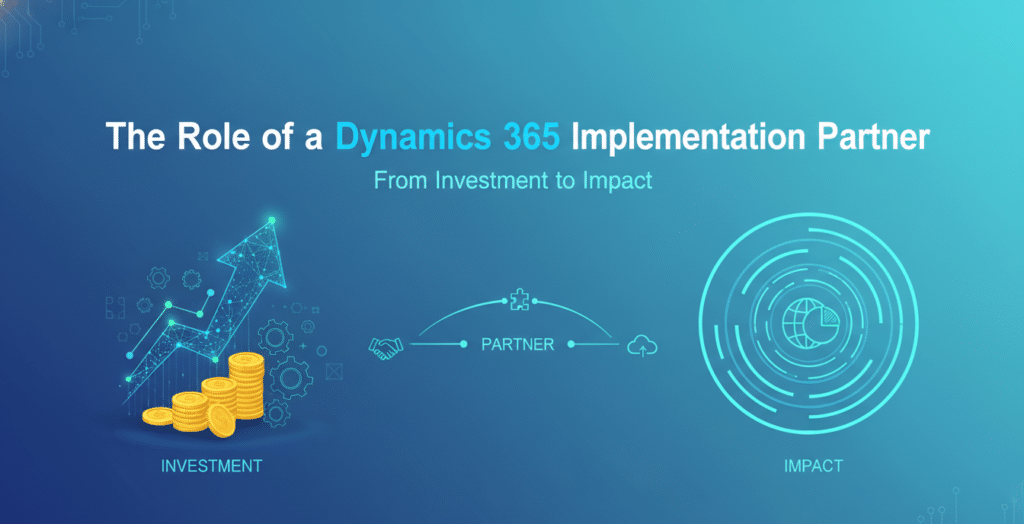
In the modern era of hyper-competition, the difference between a market leader and a struggling enterprise often comes down to their technology stack. Microsoft Dynamics 365 has emerged as the premier suite for unifying Enterprise Resource Planning (ERP) and Customer Relationship Management (CRM) into a single, cloud-based ecosystem. However, the software itself is only half the battle. To truly unlock the potential of this platform, organizations must collaborate with a certified Dynamics 365 implementation partner.
1. Why a Dynamics 365 Implementation Partner is Essential in 2025
The complexity of cloud architecture has grown exponentially. While Microsoft provides the tools, the blueprint for your specific business must be drawn by experts. A Dynamics 365 implementation partner serves as both an architect and a navigator. They ensure that your migration from legacy systems—like old versions of NAV, GP, or on-premise CRM—is seamless and data-secure.
In today’s landscape, “Success by Design” is the gold standard. This framework requires a systematic approach to implementation that identifies risks early in the project lifecycle. Your Dynamics 365 implementation partner uses this methodology to ensure that the final solution is not only functional but performant and scalable.
2. Core Responsibilities of a Dynamics 365 Implementation Partner
What exactly does a partner do? It isn’t just about “turning on” the software. A high-tier Dynamics 365 implementation partner handles:
- Business Process Mapping: They don’t just replicate your old, broken processes in a new system; they optimize them.
- Data Migration & Governance: Moving years of sensitive financial data without loss or corruption is a high-stakes task that requires precision.
- Customization vs. Configuration: A skilled partner knows when to use “out-of-the-box” features and when custom code is truly necessary to meet unique needs.
- Integration: Connecting D365 with the Power Platform, Azure Data Lakes, and third-party applications.
Technical Competency and Specialization
Not all partners are created equal. Some focus exclusively on Business Central for SMBs, while others specialize in Finance & Operations (F&O) for global enterprises. You must ensure your Dynamics 365 implementation partner has specific experience in the module you are deploying, whether it’s Sales, Marketing, or Supply Chain Management.
Industry Vertical Experience
If you are in manufacturing, you need a partner who understands “Lean Manufacturing” or “Just-in-Time” inventory. A specialized Dynamics 365 implementation partner brings pre-built industry templates that can save hundreds of hours in development time, ensuring you don’t have to reinvent the wheel for standard industry compliance.
3. The Financial Impact of the Right Choice
The Return on Investment (ROI) of an ERP project is heavily weighted by the efficiency of the rollout. A poor implementation can lead to “shelfware”—software that is paid for but never used. By contrast, a seasoned Dynamics 365 implementation partner ensures that features are deployed in phases, allowing for immediate value realization in specific departments while the rest of the system is being built.
Maximizing ROI with Licensing and Strategy
One of the most overlooked areas where a Dynamics 365 implementation partner adds value is licensing optimization. Microsoft’s pricing tiers in 2025 are nuanced, ranging from full users to “Team Member” licenses and “Attach” licenses for secondary modules. A partner helps you map your actual user needs to the most cost-effective licensing plan, potentially saving thousands of dollars in annual recurring costs.
4. The Implementation Lifecycle: A Proven Roadmap
A professional project typically spans 6 to 18 months. Understanding the stages helps in managing stakeholder expectations and ensuring transparency.
Phase 1: Diagnostic and Analysis
In this initial stage, the Dynamics 365 implementation partner conducts deep-dive workshops with your department heads. The goal is to identify “pain points” and define the future state of the business. This is where the project scope is set, and KPIs are established.
Phase 2: Design and Development
Here, the technical team builds the environment. This includes setting up security roles, configuring the general ledger, and designing custom entities in the Dataverse. A great partner will demonstrate progress through iterative sprints rather than waiting until the end to show results.
Phase 3: Testing and User Acceptance (UAT)
Before going live, the system undergoes rigorous testing. Your Dynamics 365 implementation partner will guide your team through “day-in-the-life” scenarios to ensure the software handles real-world stress. This phase is critical for catching bugs and ensuring the user interface is intuitive.
5. Navigating Data Migration Challenges
Data is the lifeblood of your ERP. A common reason for project failure is underestimating the effort required to clean and move legacy data.
- Data Integrity: A Dynamics 365 implementation partner uses specialized tools like Azure Data Factory or KingswaySoft to map old schemas to the new Dataverse structure.
- Historical Data Strategy: Deciding what data to keep “hot” in the live system versus what to archive in a “cold” data lake is a strategic decision that affects system performance and storage costs.
6. Managing Change and User Adoption
The biggest risk to any software project is human resistance. Employees are often hesitant to move away from legacy tools they have used for decades. A comprehensive Dynamics 365 implementation partner doesn’t just provide a manual; they provide:
- Interactive Training Sessions: Hands-on workshops tailored to specific job roles.
- “Train the Trainer” Programs: Empowering your internal champions to support their peers.
- Post-Go-Live Support: Ensuring that the first 90 days of operation are stable and any minor issues are addressed immediately.
7. The AI Frontier: Microsoft Copilot Integration
In 2025, AI is the centerpiece of the Microsoft strategy. Microsoft Copilot is now embedded within Dynamics 365, offering generative AI capabilities for sales emails, inventory predictions, and automated reporting. Your Dynamics 365 implementation partner is responsible for configuring these AI models to ensure they provide accurate, business-specific insights without compromising data privacy.
Harnessing Agentic Capabilities
Beyond simple chat, the latest 2025 updates introduce “agents” that perform autonomous tasks—like reconciling accounts or drafting supplier communications. A forward-thinking Dynamics 365 implementation partner will help you build custom agents using Copilot Studio, moving your business from manual processes to exception-based management.
8. Avoiding Common Pitfalls in Partner Selection
Many businesses make the mistake of choosing a partner based solely on the lowest bid. This often leads to hidden costs later. When interviewing a potential Dynamics 365 implementation partner, look for:
- Transparency: Are they honest about the challenges of your project?
- References: Can they provide three recent case studies from your industry?
- Support Structure: Do they offer 24/7 managed services or just project-based consulting?
Note: A “Gold Partner” or “Solutions Partner” designation is a non-negotiable credential. It proves the partner has met Microsoft’s highest standards for technical expertise and customer success.
9. Technical Integration: Beyond the ERP
Your Dynamics 365 instance does not live on an island. It must communicate with your website, your payroll provider, and perhaps your IoT devices on a factory floor.
- Azure Integration Services: A sophisticated Dynamics 365 implementation partner leverages Azure Service Bus or Logic Apps to ensure real-time data flow.
- Power BI Reporting: Real ROI comes when your data is visible. Your partner should build custom dashboards that pull data from across your organization into a single “source of truth.”
10. Preparing Your Internal Team
Even the best Dynamics 365 implementation partner cannot succeed in a vacuum. Your organization must be ready.
- Data Cleansing: Start cleaning your legacy data months before migration.
- Executive Sponsorship: Ensure leadership is vocal about the project’s importance.
- Clear Goals: Move beyond “improving efficiency” to “reducing monthly closing time by 40%.”
11. Post-Implementation: The Managed Services Era
Modern cloud software is updated twice a year in “Release Waves.” If your customizations aren’t maintained, these updates can break your system. This is why the choice of a Dynamics 365 implementation partner is a multi-year commitment. They provide the managed services necessary to test new features in sandbox environments before they hit your production site, ensuring zero downtime.
12. Conclusion: Securing Your Business Future
The journey toward digital maturity is not a sprint; it is a marathon. The foundation of that marathon is the expertise provided by your Dynamics 365 implementation partner. By choosing a firm that offers technical depth, industry knowledge, and a commitment to your long-term success, you ensure that your investment in Microsoft technology yields dividends for years to come.
Do not settle for a vendor who simply checks boxes. Look for a Dynamics 365 implementation partner who challenges your assumptions and pushes your business toward its highest potential.
Mohi Solutions: Your Trusted Dynamics 365 Implementation Partner
When it comes to navigating the complexities of digital transformation, Mohi Solutions stands out as a premier Dynamics 365 implementation partner. With a deep-rooted commitment to driving business agility, Mohi Solutions specializes in delivering end-to-end Microsoft Dynamics 365 services that bridge the gap between technical potential and operational excellence. Their approach is not just about software deployment; it is about crafting a scalable digital foundation tailored to the unique demands of modern enterprises.
Comprehensive Service Offerings
As a dedicated Dynamics 365 implementation partner, Mohi Solutions provides a full spectrum of services designed to optimize every facet of your organization:
- Strategic Consulting: Expert guidance on module selection (Finance, Sales, Supply Chain, or Business Central) to ensure alignment with long-term business goals.
- Seamless Implementation: Utilizing agile methodologies to ensure rapid deployment with minimal disruption to daily operations.
- Customization & Integration: Tailoring the D365 environment to fit specific industry workflows and integrating it seamlessly with existing third-party tools and the Microsoft Power Platform.
- Migration Services: Specialized support for moving legacy data from on-premise systems to the secure Microsoft Azure cloud.
The Mohi Advantage: Innovation Meets Reliability
What sets Mohi Solutions apart as a Dynamics 365 implementation partner is its focus on “future-proofing.” In 2025, this includes the strategic enablement of Microsoft Copilot, allowing businesses to leverage generative AI for predictive analytics and automated customer engagement. Their team of certified consultants ensures that every project is backed by rigorous testing, comprehensive user training, and proactive post-go-live support.
By choosing Mohi Solutions, you are partnering with an expert team that prioritizes transparency, data security, and ROI. They empower your workforce to move beyond manual processes and embrace a data-driven culture that fosters sustainable growth.
Тут веб-сайте удастся найти полезную информацию.
https://www.intensedebate.com/people/IvanBorov2026
Эти сайты для совершеннолетних способны выступать каналом интимного ликбеза.
Подобные ресурсы помогают взрослым безопасно изучать собственные границы и фантазии.
виртуальный секс с девушкой
Для пар совместный просмотр способен становиться причиной для откровенного разговора о желаниях.
Кроме того подобные сайты позволяют снимать внутреннее стресс и укреплять психическое благополучие.
Сайты 18+ способны являться средством сексуального ликбеза, а также помощью в понимании личных желаний.
Такие площадки помогают людям исследовать собственные желания в контролируемой среде, уменьшая риски фактических последствий.
ero-storitop.com
Для пар взаимное обсуждение подобных сюжетов может укреплять близость и служить стимулом для честного диалога о предпочтениях и границах.
Кроме того подобные платформы предоставляют возможность для безопасной разрядки напряжения и снятия стресса, не нанося вреда другим.